BREAKING FREE FROM INTRUSIVE THOUGHTS:
-
Intrusive thoughts are unwanted, involuntary, and disturbing thoughts, images, or urges that pop into your mind without warning.
-
They are ego-dystonic—meaning they go against your values, personality, or desires, which is why they feel so upsetting.
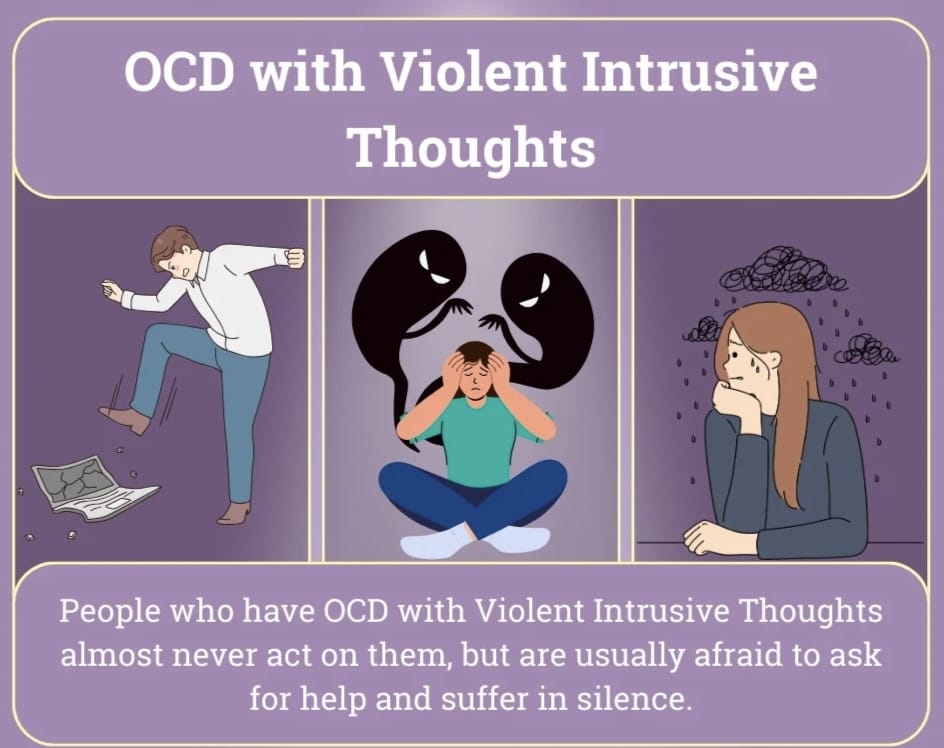
Intrusive thoughts are random, unwanted thoughts that pop into everyone’s mind. But if you have OCD, your brain treats these thoughts as urgent, dangerous, or meaningful.
- People without OCD see these thoughts as irrelevant — they let them pass like clouds.
- People with OCD analyse and judge them: “Does this thought mean I’m bad? Does this urge mean I’m dangerous?”
Let me tell you something important:
- Having bad thoughts doesn’t make you a bad person.
- Feeling an urge doesn’t mean you’ll act on it.
- Your actions, not your thoughts, define who you are.
If you’re horrified by your thoughts, it’s proof of your kindness, not evil.
Common Intrusive Thought Themes
Here are some examples of intrusive thoughts that people with OCD experience. They’re disturbing, but they don’t reflect reality or character:
1. Harm Thoughts
- “What if I hurt someone I love?”
- “What if I push someone in front of a train?”
- “What if I lose control and stab someone?”
(People who fear these things are the least likely to ever do them.)
2. Contamination or Disease Fears
- “What if I touch this and get sick?”
- “What if I spread germs to my family?”
(This leads to over-washing, cleaning, or avoiding people.)
3. Religious or Moral Obsessions (Scrupulosity)
- “What if I offend God with my thoughts?”
- “What if I’m secretly evil?”
(This causes repeated praying, confessing, or reassurance-seeking.)
4. Relationship Doubts
- “Do I really love my partner?”
- “What if I cheat without meaning to?”
(This leads to overanalyzing feelings and constant reassurance.)
5. Sexual Intrusive Thoughts
- “What if I’m attracted to someone inappropriate?”
- “What if I act on this terrible thought?”
(These are horrifying precisely because they go against your values.)
6. Symmetry or “Just Right” Obsessions
- “This picture frame isn’t even — if I don’t fix it, something bad will happen.”
- “Both sides of my body must feel equal.”
(This leads to tapping, arranging, or repeating rituals.)
NOTE: I WANT YOU TO KNOW THAT NO MATTER WHAT YOUR INTRUSIVE THOUGHTS ARE, HOW BAD AND TABOO THEY ARE, I LOVE YOU, YOU ARE BRAVE, YOU ARE NOT YOUR THOUGHTS AND YOU ARE THE ONE HEARING THEM.
REMEMBER THAT:
-
Everyone gets random thoughts. The difference in OCD is the over-importance placed on them (“If I think it, it must mean something bad about me!”).
-
Thoughts are not facts. Having a violent, sexual, or immoral intrusive thought does NOT mean you want to act on it.
-
Avoidance and reassurance-seeking feed the problem. They give intrusive thoughts more power over time. For example: Googling your thoughts excessively, analysing your thoughts etc.